Most workplace energy incidents don’t happen because people are reckless—they happen because procedures are vague, inconsistently applied, or based on theory rather than practice. A lockout tagout (LOTO) procedure that looks perfect on paper can fail in the field if it doesn’t account for real-world complexity. That’s why examples matter. They bridge the gap between compliance and real protection.
Below are real-condition lockout tagout procedure examples from common industrial settings—each highlighting critical steps, frequent errors, and how to do it right.
What a Valid LOTO Procedure Looks Like
A proper lockout tagout procedure isn’t just a checklist. It’s a documented, machine-specific sequence that identifies energy sources, isolation points, and verification steps. OSHA 29 CFR 1910.147 sets the baseline, but enforcement comes from implementation.
Core Elements Every LOTO Procedure Must Include:
- Machine identification
- List of all energy sources (electrical, hydraulic, pneumatic, mechanical, chemical)
- Specific isolation points (breakers, valves, blocks)
- Sequence for shutdown, isolation, lockout, and verification
- Authorized employee responsibilities
- Steps for safe re-energization
Without these, even the most detailed plan is just paperwork.
Example 1: Conveyor System in a Packaging Facility
Conveyor systems are deceptively dangerous. Stored tension, gravity feed, and remote start functions make them a common source of amputation and entanglement.
Scenario: Maintenance on a motor-driven roller conveyor used for boxing finished goods.
Step-by-Step Procedure:
- Notify all affected workers that maintenance is starting.
- Shut down the conveyor using the local e-stop button.
- Identify energy sources:
- - 480V electrical supply at main disconnect
- - Pneumatic valve controlling tension arms
- Isolate:
- - Open main circuit breaker and padlock it
- - Close and lock pneumatic shutoff valve with a valve lock
- Apply personal lock and tag with name, date, and reason
- Attempt to restart using the start button to verify zero energy
- Confirm no residual motion or pressure remains
- Begin maintenance only after verification
Common Mistake: Skipping the verification step. One facility reported a technician losing two fingers when a conveyor reactivated due to a faulty relay—despite the breaker being off. The verification test would have exposed the issue.
Pro Tip: Use a "group lockout box" when multiple workers are involved. Each technician applies their own lock. The machine stays locked until the last person removes theirs.
Example 2: Hydraulic Press in a Stamping Plant
High-force machinery like hydraulic presses store immense potential energy in fluid systems. A single oversight can lead to crushing injuries.
Scenario: Die change on a 300-ton hydraulic press.
Key Isolation Steps:
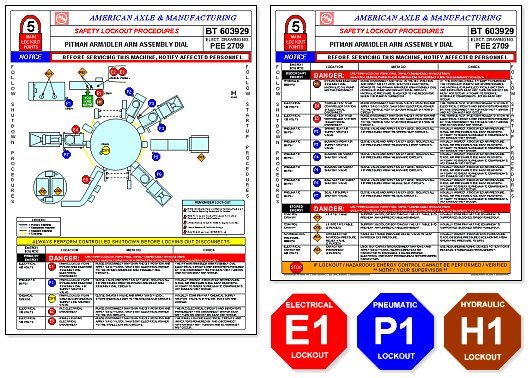
- Lower the press ram fully to relieve pressure.
- Shut off main electrical disconnect and lock it out.
- Close and lock the main hydraulic valve.
- Open the pressure relief valve to bleed stored fluid energy.
- Confirm pressure gauge reads zero.
- Apply lockout device and tag.
- Test by attempting to cycle the press.
- Verify no movement before accessing the die area.
Critical Detail: Residual hydraulic pressure is a silent killer. One Midwest plant had an incident where a technician opened a hydraulic line that hadn’t been properly bled. The sudden release injured two workers.
Workflow Tip: Conduct a pre-lockout briefing with all involved personnel. Confirm isolation points and review emergency response in case something goes wrong.
Example 3: Boiler System Maintenance
Boilers involve multiple energy types: thermal, chemical, and pressurized steam. LOTO here requires coordination across systems.
Scenario: Annual inspection of a natural gas-fired steam boiler.
Energy Sources to Isolate:
- Electrical (controls and feed pumps)
- Natural gas (fuel supply line)
- Steam (outlet header)
- Water (feed line)
Procedure:
- Shut down boiler via control panel.
- Lock out main electrical disconnect.
- Close and lock gas line shutoff valve with a chain lock.
- Close steam outlet valve and drain condensate.
- Isolate water feed line with a flange blank or lockable valve.
- Tag all points with “Do Not Operate – Inspection in Progress.”
- Test for zero energy: try to restart, monitor pressure gauges.
- Use a gas detector to confirm no leakage before hot work begins.
Common Failure Point: Neglecting secondary energy. Residual heat in boiler tubes can cause scalding even after shutdown. Always allow cooldown time and verify with thermal checks.
Note: In multi-shift environments, use durable tags and redundant locks. Night crew shouldn’t have to guess what’s locked out.
Example 4: Robotic Welding Cell
Automation introduces complexity. Robots may have remote power sources, networked controls, and capacitive energy storage.
Scenario: Replacing a welding torch on a robotic arm.
Isolation Protocol:
- Place robot in manual mode via teach pendant.
- Shut down robot controller and lock electrical disconnect.
- Lock out hydraulic power unit (if used for arm movement).
- Isolate compressed air supply to grippers and clamps.
- Engage mechanical locking pins on the arm joints.
- Apply personal lock and tag.
- Attempt manual movement to confirm immobilization.
- Verify no automatic restart capability is active.
Hidden Risk: Networked systems. Some robots can be remotely activated via plant SCADA systems. Always disable remote access during lockout.
Best Practice: Include PLC (Programmable Logic Controller) lockout in the procedure. Many facilities forget that the logic system itself must be de-energized or placed in a safe state.
Example 5: Chemical Mixing Tank with Agitator
Chemical processes involve not just energy but also hazardous materials. Lockout must include containment.
Scenario: Replacing a seal on a vertical agitator shaft.
Energy Sources:
- 240V motor power
- Pneumatic actuators for inlet/outlet valves
- Residual chemical reactivity
Procedure:
- Stop the agitator and close all inlet/outlet valves.
- Lock out motor disconnect.
- Lock pneumatic supply line with a valve lock.
- Isolate tank with blank flanges if adjacent processes remain active.
- Depressurize and drain tank if required.
- Test for zero energy by attempting to start agitator.
- Verify confined space entry permit if applicable.
- Begin work only after atmospheric testing and PPE check.
Critical Watch: Residual chemical reactions. Some mixtures continue exothermic reactions after power is off. Monitor temperature and vent if needed.
Tip: Use color-coded locks for different departments—maintenance, operations, electrical—to avoid confusion during handoffs.
Why Most LOTO Procedures Fail in Practice
Even with solid examples, companies still suffer preventable incidents. Here’s where breakdowns typically occur:
- Generic procedures: Using a one-size-fits-all template instead of machine-specific steps.
- Skipping verification: Assuming isolation worked without testing.
- Poor communication: Day and night shifts unaware of active lockouts.
- Inadequate training: Workers know the theory but not the machine-specific quirks.
- Tag reliance over lock: Tags can be ignored; locks physically prevent operation.
One study found that 60% of LOTO-related incidents involved equipment that was “believed to be de-energized.” Belief isn’t procedure.
Building Better LOTO Procedures: A Practical Framework
Instead of copying examples verbatim, adapt them using this framework:
- Map all energy sources – Walk around the machine. Look for wires, hoses, springs, tanks.
- Identify isolation points – Where can you physically break the energy flow?
- Sequence the steps – Shutdown → Isolate → Lock → Tag → Verify → Release.
- Test under real conditions – Try to restart. Check pressure gauges. Move parts manually.
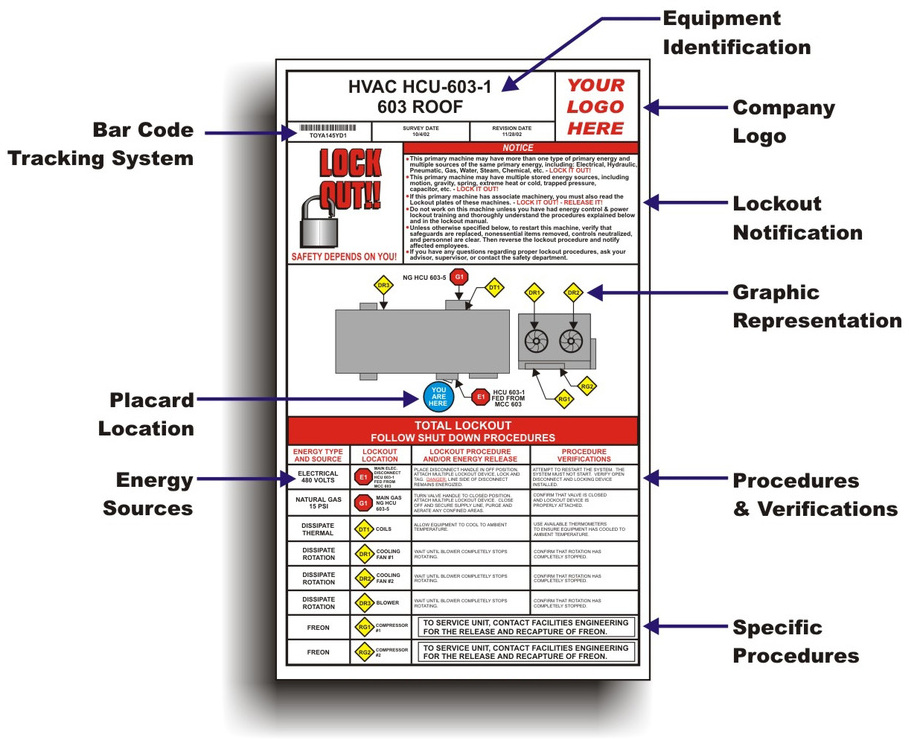
- Document and train – Use photos, diagrams, and video walkthroughs.
- Review annually or after any modification.
A LOTO procedure isn’t a one-time project. It’s a living document that evolves with the equipment.
Final Thoughts: Safety Isn’t Compliance—It’s Culture
Lockout tagout procedure examples are useless if they’re treated as box-checking exercises. The goal isn’t to satisfy OSHA—it’s to send every worker home unharmed.
Start with these real-world examples, but go further. Walk your floor. Talk to technicians. Watch where people cut corners. Then build procedures that don’t just look good on paper—they work when it matters.
Implement one new machine-specific LOTO procedure this week. Train your team on it. Test it. Refine it. Repeat.
Safety isn’t a program. It’s a practice.
Frequently Asked Questions
What is the most common mistake in lockout tagout procedures? Failing to verify the absence of energy after lockout. Many assume isolation worked without testing, leading to accidental startups.
Can tagout be used without lockout? Only in cases where energy isolation devices aren’t designed for locks. Tagout alone is less secure and requires additional safety measures.
Who is responsible for applying the lockout device? The authorized employee performing the maintenance must apply their own lock and tag.
How many energy sources should a LOTO procedure cover? All sources—electrical, mechanical, hydraulic, pneumatic, chemical, thermal, and gravitational—must be addressed.
Do LOTO procedures need to be machine-specific? Yes. OSHA requires documented, equipment-specific procedures. Generic templates don’t meet compliance standards.
Can multiple workers use the same lock? No. Each worker must apply their own personal lock. Group lockout boxes are used when multiple isolations are needed.
How often should LOTO procedures be audited? Annually at minimum, or whenever equipment is modified, to ensure accuracy and compliance.
FAQ
What should you look for in Lockout Tagout Procedure Examples for Real-World Safety? Focus on relevance, practical value, and how well the solution matches real user intent.
Is Lockout Tagout Procedure Examples for Real-World Safety suitable for beginners? That depends on the workflow, but a clear step-by-step approach usually makes it easier to start.
How do you compare options around Lockout Tagout Procedure Examples for Real-World Safety? Compare features, trust signals, limitations, pricing, and ease of implementation.
What mistakes should you avoid? Avoid generic choices, weak validation, and decisions based only on marketing claims.
What is the next best step? Shortlist the most relevant options, validate them quickly, and refine from real-world results.