Biopics don’t have to be perfect, but they do have one non-negotiable duty: to confront the truth. Not myth, not memory, not nostalgia—truth. The Michael Jackson movie sidesteps this obligation completely. Instead of wrestling with the contradictions of a genius, it retreats into hagiography. What unfolds on screen isn't insight, but evasion—a polished, hollow tribute that treats Jackson’s life like a shrine rather than a story.
For all its budget and backing, the film treats controversy like landmines to avoid, not moments to explore. It’s not just an artistic failure. It’s a betrayal of what a biopic should be.
It Avoids, Rather Than Engages, the Core Contradictions
Michael Jackson was never simple. His brilliance as a performer coexisted with isolation, transformation, and escalating legal scrutiny. Any credible biopic must grapple with that duality. Yet this film flinches at complexity.
Take the 1993 allegations. They reshaped Jackson’s life, reputation, and creative output. They triggered a seismic shift in public perception. Yet in the movie, these events are reduced to a brief news clip, a worried glance, and a lawyer’s muffled line. No context. No emotional fallout from Jackson. No exploration of how it affected his relationships or artistry. It’s as if the filmmakers are whispering, “Let’s move on,” while the audience is left staring at a gaping narrative hole.
Compare that to Bohemian Rhapsody. Flawed? Yes. But it at least acknowledged Freddie Mercury’s sexuality and declining health, even if glossed over. Or Ray, which didn’t shy from Ray Charles’ addiction and personal recklessness. Those films understood: you can’t divorce the art from the artist’s struggles.
This Michael Jackson movie doesn’t. It picks and chooses, sanitizing rather than interpreting.
The Music Feels Like a Greatest Hits Playlist, Not a Narrative Engine
A Jackson biopic should use music as more than decoration. Songs like “Billie Jean,” “Man in the Mirror,” or “Leave Me Alone” are psychological documents—expressions of paranoia, longing, self-defense. In a proper biopic, these tracks would anchor turning points, reveal internal shifts.
Instead, they’re deployed like nostalgia bombs—cue the beat, flash the costume, cut to applause. “Smooth Criminal” arrives not as a manifestation of Jackson’s growing detachment, but as a spectacle set piece. “Earth Song” plays over sweeping CGI tears, heavy on melodrama, light on meaning.
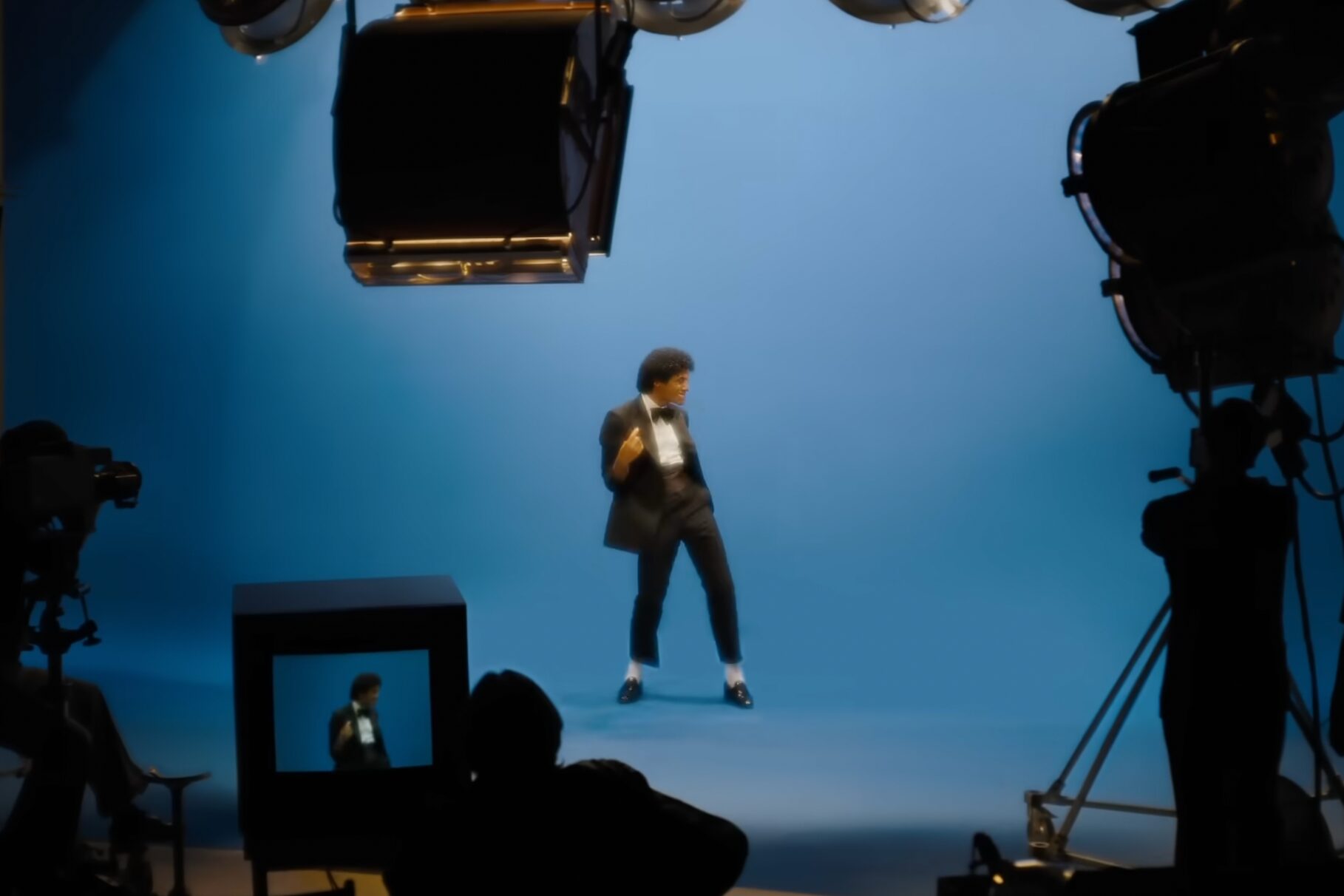
There’s no attempt to dissect why Jackson made these songs, when they emerged, or what they cost him emotionally. The film treats his discography like a playlist curated for fan service, not a map of a fractured psyche.
The Portrayal Lacks Interiority—We See the Man, But Never Know Him
The lead actor delivers a competent performance. The mannerisms are there—the glove, the lean, the whisper. But mimicry isn’t understanding. The film gives us Jackson as icon, not individual.
We see him rehearsing, dancing, recording. But we don’t hear his thought process. We don’t witness his fears, his obsessions, his creative doubts. What kept him awake? What did he regret? What did he hope for? These questions go unanswered.
Worse, the film ignores the psychological toll of lifelong fame. Jackson was a child star who never had a childhood. His father’s abuse, his early stardom, the pressure to outdo Thriller—these should be narrative pillars. Instead, they’re footnotes. The result? A character who moves through scenes but never evolves.
It Treats the Jackson Estate Like a Co-Producer, Not a Complicated Force
No biopic about Michael Jackson can escape the shadow of the Jackson Estate. And this one doesn’t try. The film feels less like an independent account and more like a licensed relic—approved, curated, and controlled.
That control shows. Any criticism of the Jackson family, especially Joe Jackson, is muted. The internal dynamics—jealousy, control, financial exploitation—are flattened into background noise. Katherine Jackson appears as a serene matriarch, not a woman who raised nine children amid chaos.
The Estate’s influence also warps the timeline. Certain albums get inflated importance; others vanish. Business decisions are portrayed as visionary, never flawed. There’s no mention of failed ventures, poor tours, or mismanaged comebacks. The film acts like a corporate bio, not a human one.
Compare this to The Last Dance, where Michael Jordan’s competitive fury was shown as both strength and flaw. Or Amy, which didn’t flinch from Winehouse’s self-destruction. Those films worked because they weren’t beholden to estates—they answered to truth.
This one answers to permission.
The Allegations Are Handled with Cowardice, Not Courage
Let’s be clear: Jackson was never convicted. Two criminal trials resulted in acquittal or dismissal. But saying the allegations don’t matter is naive. Saying they didn’t shape his life is dishonest.
Survivor testimonies from Leaving Neverland shattered illusions for millions. Whether you believe them or not, they’re part of the Jackson story now. A bold biopic would engage with that—explore the trauma, the denial, the cultural reckoning.
This film does not. It doesn’t defend. It doesn’t accuse. It pretends the allegations barely happened.

That silence isn’t neutrality—it’s complicity. By refusing to address the lived experiences of those who came forward, the film becomes part of the problem. It prioritizes image over accountability, legacy over honesty.
A biopic doesn’t have to take sides. But it must acknowledge the battlefield.
What a Better Biopic Would Have Done
Imagine a film that opens not with a concert, but with Jackson alone in a hotel room, staring at his reflection. A film that shows him rehearsing “You Are Not Alone” while isolated in a Berlin suite, disconnected from the world his music claims to heal.
Imagine a scene where Jackson watches the 1993 news conference in silence, then turns off the TV and whispers, “They don’t know me.” Not deflection. Pain.
Imagine a montage of child stardom—Motown, the Apollo, the pressure—intercut with footage of a 30-year-old Jackson playing with Bubbles the chimp, as if trying to reclaim a lost youth.
These aren’t speculative flourishes. They’re grounded in documented behavior, interviews, and psychological profiles. A real biopic would use them to build empathy without excusing behavior.
Instead, we get a highlight reel with trauma removed.
The Danger of Mythologizing Over Understanding
The danger here isn’t just a bad movie. It’s a pattern. Hollywood keeps turning complex Black artists into sanitized legends—Jackson, Prince, Whitney, Tupac. Their struggles are minimized. Their pain is aestheticized. Their contradictions are erased.
This film continues that trend. It gives us the glove, the moonwalk, the voice—but not the man beneath. It preserves the myth so perfectly that the human being disappears.
And fans lose. Because real admiration doesn’t require blindness. Loving Michael Jackson’s art doesn’t mean ignoring the questions his life raises.
Great art forces us to hold two truths at once: Jackson changed music forever. And his life was marked by isolation, transformation, and unresolved pain.
This biopic can’t hold both. It chooses comfort over courage.
Conclusion: Biopics Should Reveal, Not Conceal
The Michael Jackson movie fails because it forgets its purpose. A biopic isn’t a memorial. It’s an investigation. It should challenge, unsettle, and illuminate.
Instead, this film feels like a tribute act—well-dressed, technically proficient, emotionally vacant. It avoids hard questions, dances around trauma, and reduces a complicated life to a sequence of hits and headlines.
If you want to understand Michael Jackson, watch his performances. Read the interviews. Listen to the lyrics. Study the documentaries that don’t look away.
But don’t expect this movie to help. It fails the basic duty of a biopic: to tell the truth.
FAQ
Why is the Michael Jackson biopic considered a failure? Because it avoids addressing the central contradictions of his life—his genius, trauma, isolation, and allegations—opting for a sanitized, mythologized version instead.
Does the movie address the abuse allegations? Minimally. It references them through brief news clips but never explores their impact on Jackson or his relationships, treating them as background noise rather than pivotal events.
Is the lead actor’s performance good? Technically strong in mimicking mannerisms and dance moves, but lacking emotional depth or insight into Jackson’s inner world.
Who controlled the narrative in the film? The Jackson Estate had significant influence, resulting in a portrayal that favors legacy preservation over honest storytelling.
How does this biopic compare to others like Ray or Bohemian Rhapsody? Unlike those films, which grappled with their subjects’ flaws and struggles, this Jackson biopic sidesteps controversy, making it feel less authentic and emotionally resonant.
Can you appreciate Jackson’s music without supporting the film? Absolutely. Critiquing the biopic doesn’t diminish his artistic impact. You can honor the art while demanding honest narratives about the artist.
What should a better Jackson biopic include? A deeper look at his childhood, psychological state, creative process, relationships, and the allegations—not to sensationalize, but to understand.
FAQ
What should you look for in The Michael Jackson Movie Fails at the Basic Duty of a Biopic? Focus on relevance, practical value, and how well the solution matches real user intent.
Is The Michael Jackson Movie Fails at the Basic Duty of a Biopic suitable for beginners? That depends on the workflow, but a clear step-by-step approach usually makes it easier to start.
How do you compare options around The Michael Jackson Movie Fails at the Basic Duty of a Biopic? Compare features, trust signals, limitations, pricing, and ease of implementation.
What mistakes should you avoid? Avoid generic choices, weak validation, and decisions based only on marketing claims.
What is the next best step? Shortlist the most relevant options, validate them quickly, and refine from real-world results.